
Assessed · AKROTIRI RUINS TOURS
Private Guided Tour of Akrotiri Excavations in Santorini
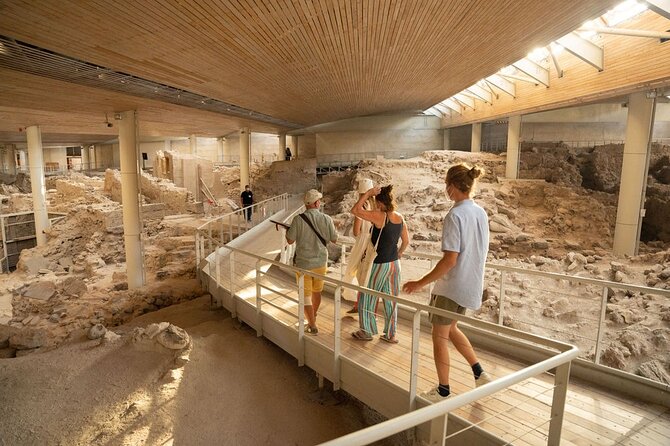
Akrotiri is one of Santorini’s most compelling time capsules. An entire Bronze Age town was buried under volcanic ash for thousands of years, so the ruins still feel eerily readable, like you’re studying a moment in time rather than random stones.
I especially love how this private visit is taught by Kostas, with clear explanations and practical visual support. I also like that the tour focuses on the big stuff you’d miss on your own, like how people lived, traded, and built, not just what the site looks like.
One consideration: the tour does not include admission tickets, so you’ll need to budget for the site entry separately, plus the stated extra fees and taxes per person.
Key things you’ll enjoy most
- A guide inside the excavations, so you’re not left guessing what you’re looking at
- Bronze Age city planning, from streets and architecture to daily life and social organization
- Frescoes and religious symbolism, tied to how the people actually thought and acted
- Advanced plumbing and household finds, including pottery and furniture style details
- The eruption and preservation story, explaining why Akrotiri survived when so many sites did not
Akrotiri’s Greek Pompeii feel, and why it’s worth your time
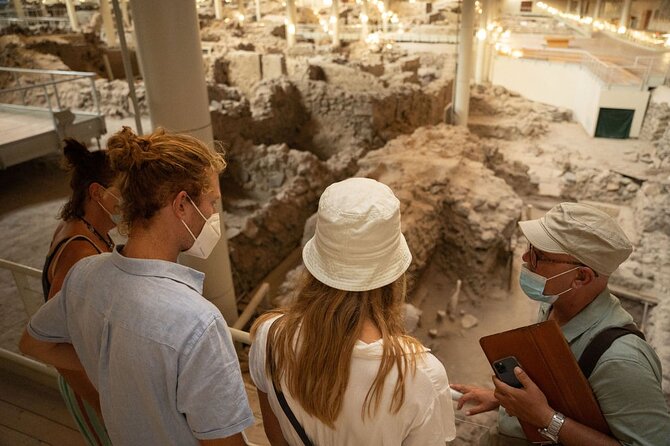
If you like history that you can picture, Akrotiri is a strong pick. This is not just a pile of ruins. It’s a prehistoric settlement preserved by volcanic ash, which means you can follow the logic of the town: spaces, functions, and how structures worked together.
The best part is that a guide changes what the site means. On your own, you might see walls, rooms, and painted fragments. With a professional guide, you can connect those pieces into daily life. You learn what the settlement looked like as a functioning city, including what was happening in the home, in public spaces, and in trade and social systems.
This tour also leans into the ideas people love to argue about. There’s a clear parallel drawn between Akrotiri and Plato’s Atlantis story, which many believe was inspired by this kind of catastrophe in the Aegean world. It turns the ruins into a conversation, not just a museum walk.
More Akrotiri excavation tours in Santorini:
- Archaeological Bus Tour To Akrotiri Excavations & Red Beach
★ 4.6 · 280 reviews - Archaeological Bus Tour to Akrotiri Excavations & Red Beach
★ 4.5 · 150 reviews - Private Cultural Villages Sightseeing & Akrotiri Excavations
★ 5.0 · 135 reviews
Meeting Kostas at Akrotiri, entrance gate start
Your tour starts at the Akrotiri entrance gate in Mesaria, with Kostas meeting you after ticket purchase. The first few minutes matter. This isn’t a “show up and figure it out” experience.
You get a brief orientation and a plan for what you’re about to see. You also get an introduction to the site before you step deeper into the excavations. For me, that kind of setup is what separates a satisfying visit from a confusing one. You start with a mental map, so the rest of the time flows faster.
Even the time at the entrance helps because Akrotiri is large enough that you could wander and miss the strongest themes. Here, you’re pointed toward what’s important: urban planning, everyday life, artistic themes, religious practice, and the volcanic preservation angle.
The private format, up to 4 people, and how pace works
This is a private tour for your group only, sized at up to 4 people. That detail sounds small, but it changes the feel. You can ask questions without feeling like you’re slowing everyone down. You also get a visit that can adapt to your pace and interests.
The tour length is about 1 hour to 1 hour 30 minutes. That range is useful because it signals the guide is likely balancing two things at once: covering the major highlights while leaving room for interpretation and discussion. If you like to stop, look closely, and ask why, this format tends to work well.
Also, you don’t have hotel pickup or drop-off. That’s more about logistics than comfort. You’ll plan your own way to the entrance gate, then the experience carries you through the site at the guided pace.
Touring Akrotiri: urban planning, architecture, and how to read the town
Stop 2 is the heart of it, the guided walk through the prehistoric settlement of Akrotiri. The tour focuses on the structure of the city, not just the spectacle.
Here’s what that means in practice:
You’re guided through urban planning and architecture of a Bronze Age city. Instead of only seeing rooms and walls, you learn how the spaces likely connected, and how the layout supported daily routines and community life.
You also cover daily life, trade, and social organization. These topics turn the ruins into a believable society. You start thinking in terms of people moving goods, sharing responsibilities, and using the town’s spaces for real needs.
The emphasis on architecture and daily systems is what makes this tour a better use of time than a quick self-guided pass. You’re not just collecting facts, you’re learning the logic of the settlement.
One more practical point: the tour is designed to allow time for interpretation. So when you pause at a detail, you’re not forced to rush past it to keep up with a group schedule.
A few more Santorini tours worth comparing
- Private Santorini Tailor Made – Choice of the Guest!
★ 5.0 · 1,972 reviews - Private Classic Santorini Panorama: Visit the most popular destinations!
★ 5.0 · 872 reviews - 6-Hour Private Best of Santorini Experience
★ 5.0 · 720 reviews - Private Santorini Sightseeing Tour – Customizable,Cruise Friendly
★ 5.0 · 717 reviews
Frescoes, pottery, and the art themes you can actually understand
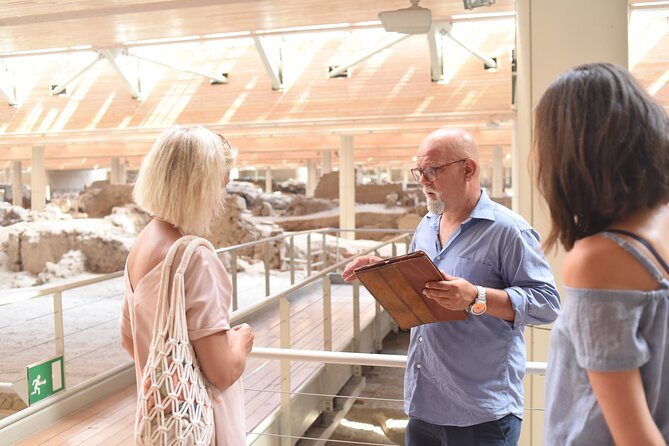
Akrotiri is famous for art finds, and this tour uses that material to explain culture. You spend time on fresco art and its themes, which is a big deal if you’ve ever looked at fragments and wondered what they were meant to say.
The goal is not just to identify the artwork, but to connect it with what the people cared about. Frescoes can look decorative from a distance, but the themes help you see them as part of communication, identity, and belief.
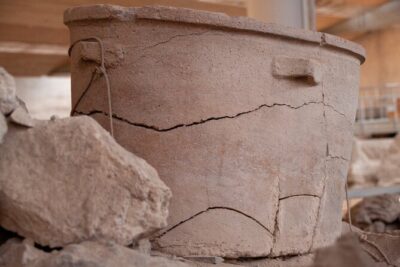
You also get context around discoveries like pottery and furniture. Those sounds like basic categories, but with a guide they become evidence. You learn how these items signal everyday routines, household life, and even preferences in design and function.
Some sites hand you objects. Akrotiri, when guided well, helps you place those objects into living spaces, which makes the whole place feel more coherent.
Religious practices and symbolism, shown through what survived
Another strong focus is religion and symbolism. Akrotiri isn’t just streets and homes. There’s a spiritual layer to the city’s organization, and the tour helps you read that.
You’ll learn about religious practices and how symbolism may have appeared in daily life. That can include how art, space, and ritual activities might link back to belief systems. It’s the kind of interpretation that makes ruins feel less anonymous.
If you like myth and meaning, this portion tends to be a highlight. It’s also the area where a good guide earns their fee, because the clues can be subtle. With an organized explanation, you’re not left guessing what the evidence is trying to suggest.
Advanced plumbing systems and why this matters more than you think
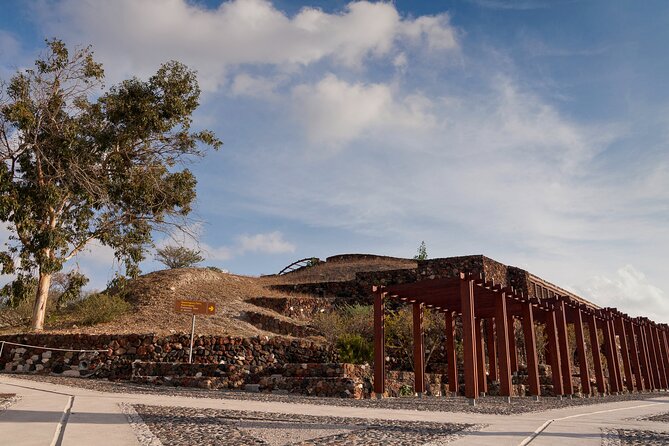
One of the most impressive parts of Akrotiri is the quality of household infrastructure, including advanced plumbing systems. The tour includes learning about those discoveries, like pottery and furniture too, but plumbing is especially important because it signals engineering and planning.
When you understand that a settlement had sophisticated water and waste systems, your mental picture changes. This wasn’t a temporary camp or a simple village. It was built with long-term needs in mind.
That’s also where the guide’s teaching style shows. In a guided visit, plumbing is explained so you can see the practical function behind the remains. It turns stone channels and structural features into a real daily convenience.
The eruption story: why Akrotiri stayed preserved
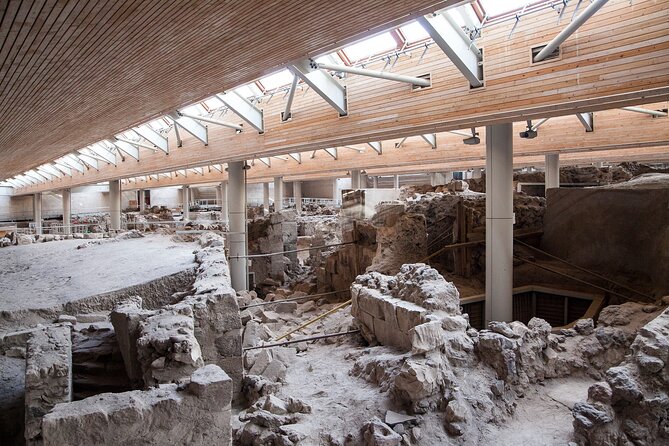
The volcanic eruption and preservation is part of the tour core. This isn’t a general “volcano equals ash” explanation. You get the crucial background on how the ancient city was buried for thousands of years.
This matters because preservation shapes what you can learn. Akrotiri survived in a way many other sites did not, so details like painted surfaces, household layout, and certain structural clues lasted longer than they would have otherwise.
As you listen to the eruption and preservation narrative, you start to understand why the site feels so readable. You’re not just looking at a wreck. You’re studying a town that froze in time because conditions helped it stay intact.
Plato’s Atlantis parallels, handled in a grounded way
The tour includes parallels with Plato’s Atlantis story. Many believe Atlantis was inspired by Akrotiri, and this visit brings that connection into the conversation.
This is the kind of topic that can go off the rails if handled poorly, turning into wild speculation. In a guided format like this, the emphasis is on connecting ideas to what you can see and the kind of catastrophe that would leave lasting impressions in Aegean memory.
Even if you’re skeptical, it’s a fun lens. You get to think about how ancient stories might grow from real events. And if you like mythology, it gives the ruins an extra layer beyond architecture and art.
Tour flow details: where you start, where you finish, and what you can do next
You start at the Akrotini entrance gate after ticket purchase. The first stop is with Kostas, where you get orientation and an overview. Then you enter the excavations for the main guided walk.
The tour ends inside the archaeological site, at Akrotiri in the Fira area. After the tour ends, you can stay longer and continue the visit independently if you want extra time on the details that caught your attention.
This matters for two reasons. First, Akrotiri rewards slow looking. Second, a guided hour can’t cover everything equally. If you want to re-check fresco fragments or architecture features you didn’t fully process the first time, you have the chance.
Price and extra costs: what $240.59 per group really means
The price is $240.59 per group for up to 4 people. That means the tour cost per person drops as you add group members, which is usually the best value case for private guiding.
On top of that, there is an additional all fees and taxes amount of €20.00 per person, and admission tickets are not included. The admission ticket gap is important because it affects your final budget, especially if you’re traveling solo or in a pair.
So the value math looks like this:
- You’re paying for a professional guide and a private walkthrough through the excavations.
- You’re also paying for time, explanation quality, and the ability to ask questions without a big-group crowd.
- You still need to pay site admission separately, plus the stated €20 per person fees and taxes.
If you’re the kind of person who reads about archaeology and wants the why behind the what, paying for the guide tends to be worth it. The alternative is self-guiding, where you might not connect the dots as quickly.
Who this tour fits best in Santorini
This tour is a strong match if you want meaning, not just facts. If you like seeing how people lived, how art communicated themes, and how infrastructure showed planning, you’ll probably enjoy the structure.
It’s also a good fit for couples, small families, and small groups who can coordinate to share the private price. Because it’s only up to 4 people, you’ll likely get more attention than on larger group tours.
The tour assumes moderate physical fitness. That likely means walking and time on-site, so if you have mobility limitations, you should plan accordingly. Service animals are allowed, which is helpful to know.
Finally, the tour is offered in English, with a mobile ticket. That combination is practical for many visitors who want the explanation in a language they can follow easily.
Small practical notes that help you have a smoother visit
Because the meeting point is at the Akrotiri entrance gate and the tour ends inside the site, plan your day with time for travel between Santorini towns and the archaeological area.
Also remember: admission tickets are not included. Make sure you have what you need before you meet the guide, so you don’t waste the first minutes.
It’s a private experience, so you can generally treat it like a focused appointment, not a casual wander. If you show up ready to listen and ask questions, you’ll get more out of the hour to 1.5 hours.
Should you book this Akrotiri private guided tour?
I’d book it if you care about understanding what you’re seeing at Akrotiri. A guided visit is the difference between seeing excavated rooms and learning how a Bronze Age city functioned, including urban planning, daily life, art themes, religious practice, and preservation after the eruption.
I’d also book it if you want a guide who explains details in an easy to appreciate way. The tour is described as thorough, and people highlight Kostas as passionate about history and strong at pointing out architectural details with visual support. That’s exactly what you want at a site where clues can be subtle.
Skip it only if you’re happy self-guiding and you don’t mind missing the interpretive connections. If you’re going to spend time at Akrotiri, this format helps you get the most out of that time, fast.
If you want a high-impact, small-group Akrotiri experience with real context, this is a smart use of your Santorini hours.
Recently reviewed around Santorini
- Semi Private Santorini Catamaran Tour★ 4.5 · 7 reviews
- Best of Santorini: 3-hour Private Tour with a Local Guide★ 5.0 · 39 reviews
- Santorini Instagram Tour★ 5.0 · 10 reviews
- Santorini: Caldera Private Sailing Boat Cruise with Beneteau Oceanis 46.1★ 5.0 · 15 reviews
- Small Group Santorini Discovery Tour with Lunch and Wine Tasting★ 4.5 · 12 reviews
- Santorini Caldera: Private Cruise with Speed Boat & Open Bar★ 5.0 · 6 reviews
- Santorini: Boat tour to Volcano, Hot Springs & Thirasia island★ 4.5 · 22 reviews
- Private Cruise Luxury Self Drive Boat – Explore the best spots★ 5.0 · 39 reviews
Akrotiri Ruins Tours, compared.
Archaeological Bus Tour To Akrotiri Excavations & Red Beach
Read our review →Archaeological Bus Tour to Akrotiri Excavations & Red Beach
Read our review →
Private Cultural Villages Sightseeing & Akrotiri Excavations
Read our review →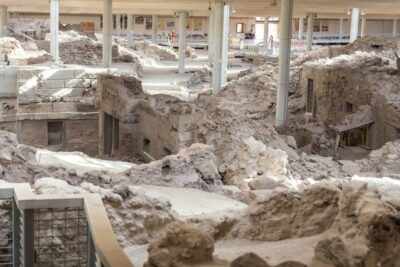

Akrotiri Excavation, Megalochori, & Beaches Tour
Read our review →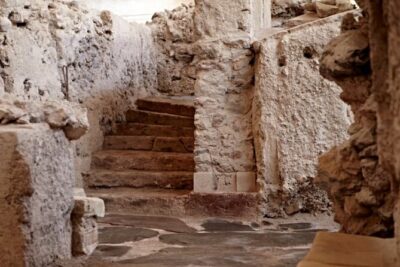
Guided Tour to the Akrotiri Archaeological Site in Santorini
Read our review →Browse the lists this tour appears in